Check Engine Light Diagnostics
Why Is My Check Engine Light On?
A code tells us which system is affected. Figuring out what actually failed, and whether it's worth fixing right now, is the real diagnosis — that's the part we do honestly.
- All makes & models
- Same-day service
- Free quote before work
- Family-run in Spearfish
Flashing or solid? Know this first.
A flashing check engine light means an active engine misfire is happening right now, and unburned fuel can damage your catalytic converter within minutes. Stop driving as soon as it's safe and get the vehicle looked at. A solid check engine light means a problem has been detected but it's not typically an emergency — you can usually drive normally and get it checked in the next few days.
What we do
Full diagnostic scan reading the actual trouble codes stored in your vehicle's computer
Interpretation of what the code means for your specific vehicle, not a generic printout
Physical inspection to confirm the cause — a code points to a system, not a specific failed part
Repair of the confirmed problem: sensors, gas cap seals, ignition components, emissions parts, and more
Clearing the code and verifying the fix with a drive cycle or follow-up scan
Explanation of what's urgent versus what can be scheduled later
Signs you need this now
- Check engine light on solid — schedule a scan in the next few days
- Check engine light flashing — stop driving when safe and get it looked at promptly
- Check engine light on along with a rough idle, hesitation, or loss of power
- A noticeable drop in fuel economy with no other explanation
- A smell of gas or exhaust that wasn't there before
- The light came on right after fueling up (often just a loose gas cap)
- The light has been on for weeks with no other symptoms — still worth checking, since some issues get worse over time
Why it matters in the Black Hills
South Dakota's emissions requirements are not the same as states with strict annual smog testing, so what matters here isn't passing an emissions test — it's the vehicle running right and not developing a bigger problem. That said, cold Black Hills winters and long highway hauls to Rapid City put extra strain on components an illuminated check engine light often flags: oxygen sensors, mass airflow sensors, and EVAP system seals all work harder in temperature swings from -20°F to 90°F over the course of a Spearfish year. A code that shows up after the first hard cold snap, or after towing to Devils Tower in summer heat, is common and worth diagnosing properly instead of ignoring.
What it costs / how long it takes
- Diagnostic scan and code interpretation: usually 30–60 minutes
- Physical inspection to confirm the cause: often included with the diagnostic, sometimes longer if the issue is intermittent
- Repair time and cost: varies entirely by the actual problem — a loose gas cap costs nothing to fix, a catalytic converter is a bigger job
We never replace a part based on a code alone. A code narrows down the system; the diagnosis is confirming which part in that system actually failed. We show you what we found before we recommend anything.
How our process works
- 1
Read every code
We connect a scan tool and read every stored code, not just the one that triggered the light.
- 2
Inspect to confirm
We inspect the flagged system to confirm the actual cause — this is the step a free parts-store code read skips entirely.
- 3
Explain and quote
We explain what's wrong in plain terms and quote the repair before doing any work.
- 4
Fix and verify
We fix the confirmed problem, clear the code, and verify the light stays off.
A note on "free" code reads
Many parts stores offer a free code read, and that's a fine first step. But a code only tells you which system is affected, like "the oxygen sensor circuit" or "a small EVAP leak" — it doesn't tell you which specific part failed or whether the part is even bad versus a wire, connector, or vacuum leak feeding a false signal. Replacing parts based on a code alone is the most common way people spend money without fixing the problem. We do the inspection step so the part we replace is the part that's actually failed.
Common causes we see
- Loose or damaged gas cap — the single most common trigger for an EVAP-related code
- Failing oxygen (O2) sensor — affects fuel economy and emissions readings
- Catalytic converter issues — often a downstream effect of another unresolved problem
- Engine misfire — spark plugs, ignition coils, or fuel delivery; flashing light territory if active
- EVAP system leak — a small crack or bad seal in the fuel vapor system
- Mass airflow sensor problems — throws off the engine's fuel and air mixture
A battery or alternator issue can also trigger a check engine light, and some codes tie into climate control problems we diagnose too.
Service area
We serve Spearfish, Belle Fourche, Sturgis, Deadwood, Lead, Whitewood, Saint Onge, Central City, the Northern Black Hills, the I-90 corridor, and Spearfish Canyon. Heading into winter? See our full winter vehicle checklist.
Frequently asked questions
A check engine light isn't a mystery you have to guess at
And it isn't automatically an emergency either. Bring it in and we'll tell you plainly what the code means, what we found on inspection, and what it'll take to fix it.
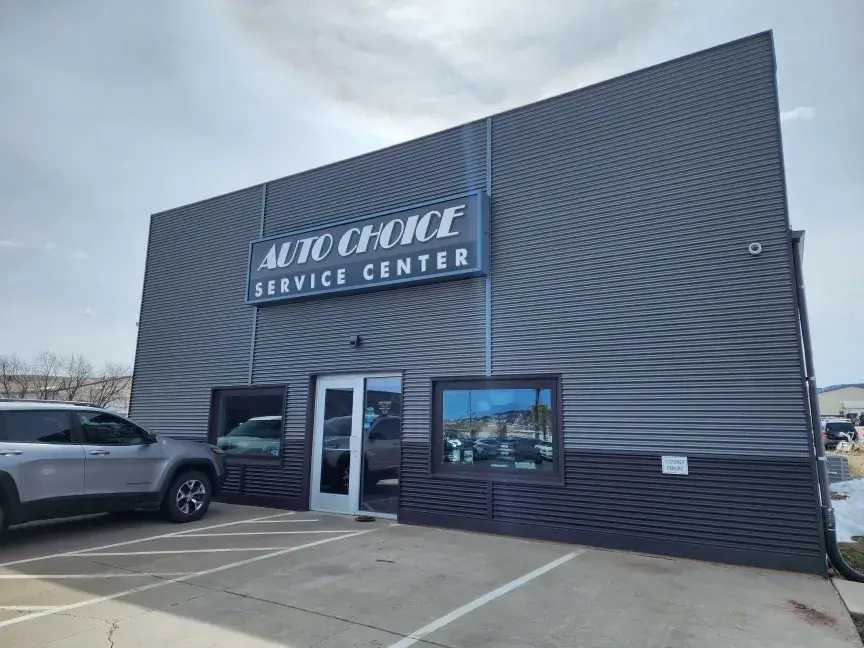
Auto Choice Service Center · 2935 E Colorado Blvd, Spearfish, SD 57783
Hours: Monday–Friday 8:00 AM – 5:00 PM · Saturday & Sunday: Closed
Request an appointment
Tell us about your vehicle and what you're noticing. We'll confirm a time by phone or email — or call (605) 722-1527 during shop hours.